
Managing taxes might be a little tough for you if you are self-employed in New Jersey. If you understand the basic it will become easier for you to understand the dynamics of being a self-employed taxpayer.
This blog post will help you understand the tax return filing requirements as a self-employed individual and much more.
Self-Employed Taxes In New Jersey
Self-employed taxes are the kind of taxes imposed on workers who work for themselves. The scenario in their case is different from that of other employees who get their salaries after tax deduction from their paychecks.
As there is no employer in their case, self-employed people are in charge of figuring out and paying their own taxes. This covers both state and federal taxes.

Tax Return For Self-Employed Person
Self-employed workers must pay self-employment tax as well as income tax under New Jersey Law. Moreover, Social Security and Medicare taxes are also imposed on such workers, which are otherwise paid half by the employer. Unfortunately, in this case, they have to pay these taxes in full.
For self-employed individuals in New Jersey, it is extremely important to understand these taxes and set aside a certain amount from their monthly income to pay them later. If you think you cannot file a tax return, look for a professional consultancy.
Tax Filing Requirements for Self-Employed Individuals in New Jersey
There are several requirements and steps involved in filing taxes for self-employed individuals in New Jersey. Mainly, you need to:
- Report your income
- Calculate your tax liability
- Make payments
Report Your Income
Income reporting covers earnings from sales of goods, payments for services, and other business-related activities. You must keep thorough records of your earnings to avoid any issues.
You must complete a state tax return for New Jersey along with the federal tax filings.
The state utilizes your federal adjusted gross income as a starting point for determining state taxes, so you must do it carefully.
Calculate Your Tax Payments
Both federal and state taxes are covered by these contributions. Estimated tax payments are required on a quarterly basis in New Jersey. Penalties and interest may be assessed if these payments are not made.
You must estimate your annual income and apply the relevant tax rates to determine your projected tax payments. A lot of independent contractors base their expected compensation on the tax return from the prior year.
If I’m self-employed, what taxes must I pay?
You should file a tax return at the end of the year if you are self-employed and earn more than $400 annually. Additionally, you must pay “estimated quarterly taxes” four times a year. This is due to the fact that clients are paying you directly, and no withholding tax has been deducted from your earnings.
The amount that your employer deducts from your salary and pays to the government as a portion of your annual income tax is known as withholding. You are responsible for paying your own withholding while working for yourself.
Social Security and Medicare benefit programs are funded in part by the self-employment tax. If your net earnings are $400 or more, you typically submit an income tax return and pay income tax. Subtract your business costs from your business income to determine your net earnings. You have a net loss if your costs exceed your revenue. You have a net profit or net earnings if your business’s costs are lower than its revenue.
What Makes Me Eligible To Pay Tax As Self-Employed In New Jersey?
You are eligible to pay tax as self-employed in New Jersey if you have:
- Earned more than $400 as a self-employed independent contractor.
- Earned more than $108.28 of income from church employment.
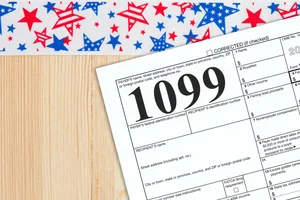
- Got a 1099 form.
In New Jersey, How Much Should Self Employed Individuals Withhold For Taxes?
In New Jersey, you must pay federal, state, and self-employment taxes as a freelancer. The precise amounts of these taxes depend on your income.
Generally speaking, self-employed individuals in New Jersey should deduct between 25 and 30 percent of their income for taxes. This is only an estimate and the exact amount depends on a few other factors.
FAQs
Who qualifies as self-employed in New Jersey?
Self-employed individuals in New Jersey include independent contractors, gig workers, and company owners. You are probably self-employed if you receive a 1099 form rather than a W-2. You could still have to submit self-employment taxes for extra money you make from freelance work or side projects, even if you have a full-time job.
What is the self-employment tax rate in New Jersey?
In New Jersey, the self-employed tax rate is 15.3%. It is a combination of two types of taxes: a 2.9% Medicare tax on all of your earnings as an independent contractor and a 12.4% Social Security tax on earnings up to $147,000.
Can you get a tax refund in New Jersey if you’re self-employed?
Yes, you can get a tax refund in New Jersey if you’re self-employed. In case your total tax payments exceed your actual tax liability, you can ask for a return even if you’re self-employed.
As a self-employed, what can I claim back?
If you are self-employed, you can claim “ordinary and necessary” business expenses that will help you reduce your taxable income.
Why is self-employment tax so high?
You might feel that the self-employment tax is high, as you are playing both the roles of employer and employee.
Do self-employed individuals have to pay quarterly taxes in New Jersey?
Yes, self-employed individuals must pay quarterly taxes in New Jersey because they are responsible for filing and reporting taxes as any employer would.
Conclusion
You must plan and prepare to file your taxes in New Jersey if you are self-employed. There are critical requirements that you need to fulfill. So pay attention and learn how to do it properly, as otherwise it could result in a problem. You can also seek help from a tax professional.